
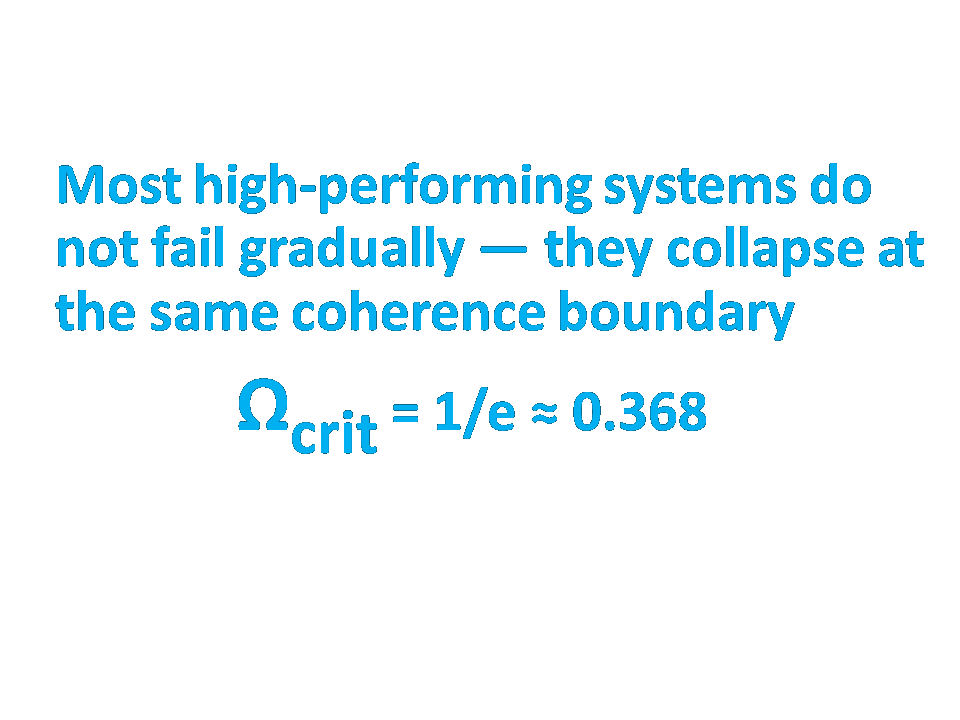
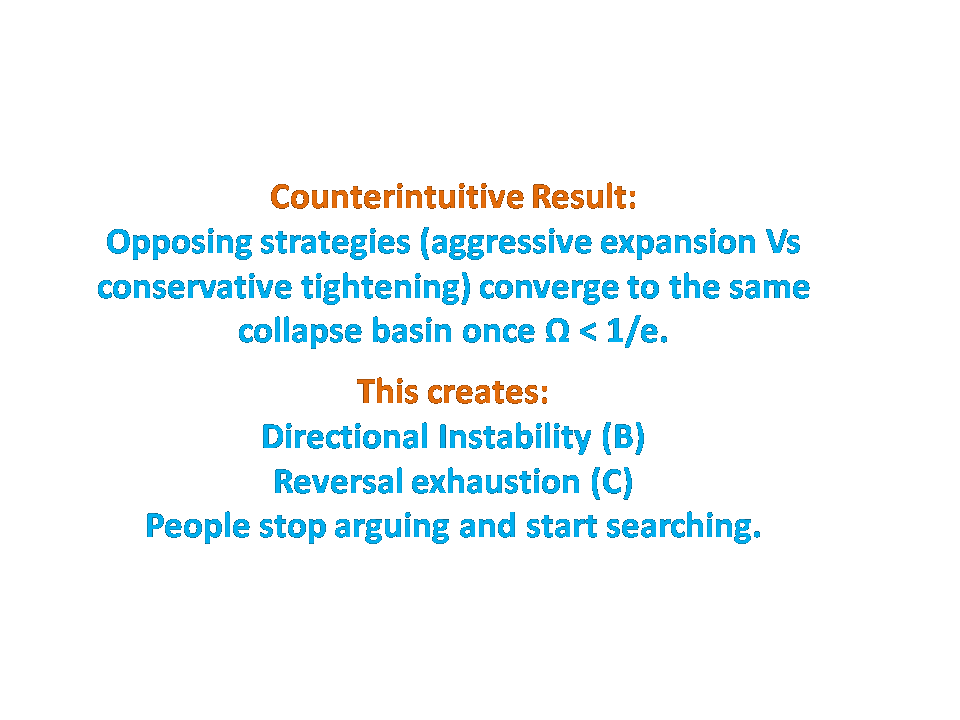
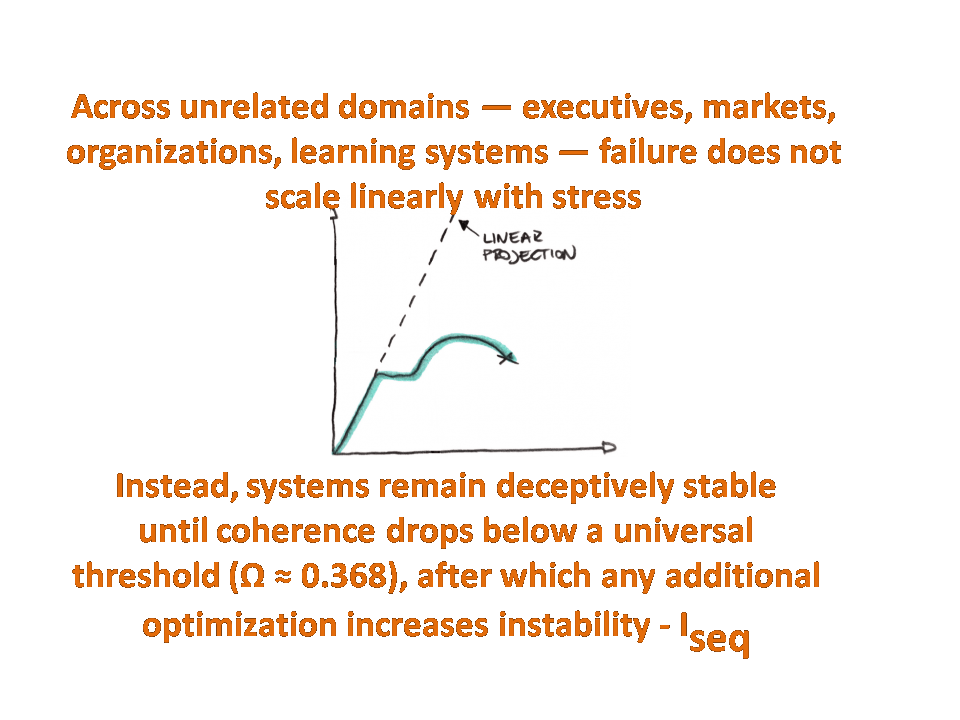
Most Systems don't fail from bad decisions, but they fail after crossing a Coherence Boundary
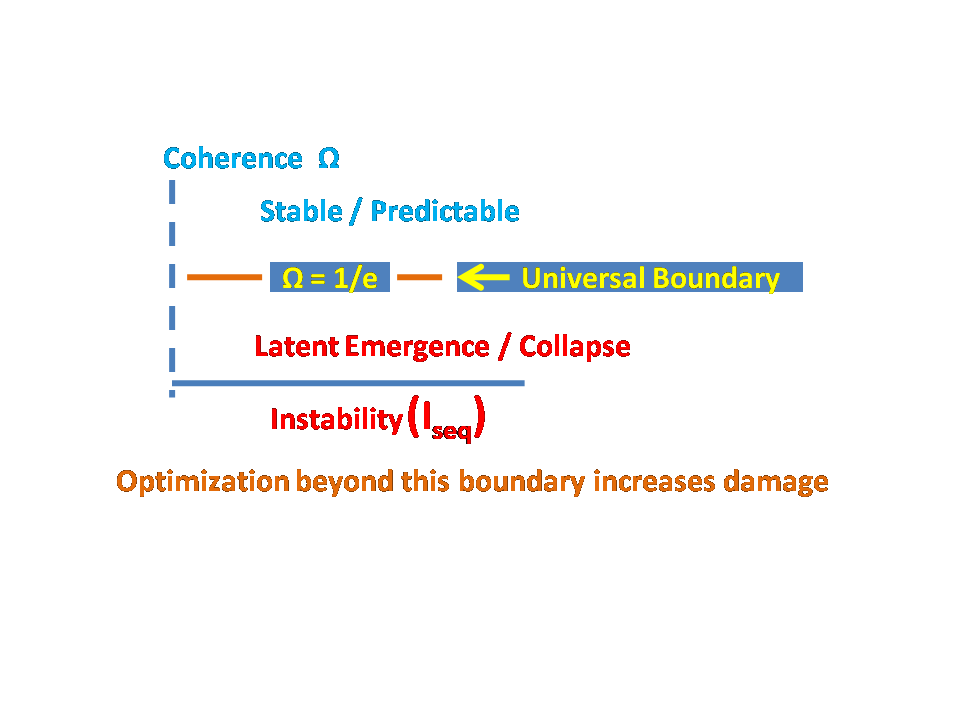
Decisions stop working before leaders realize it. We identify that boundary – before damage becomes irreversible: based on Configurational Outcome Modeling (COM) and Universal Coherence thresholds.
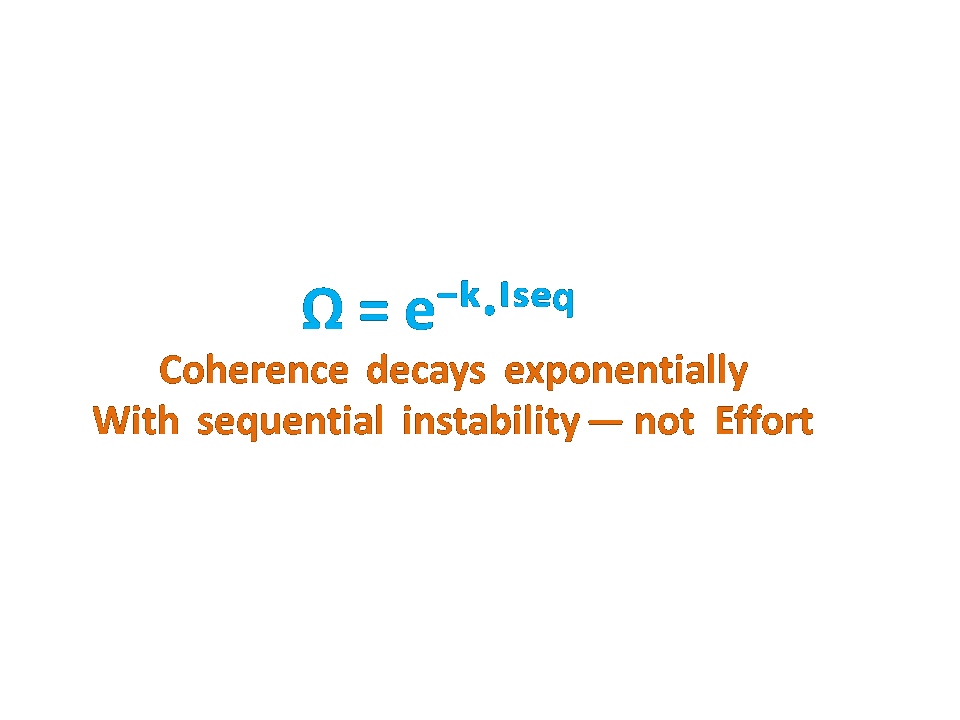
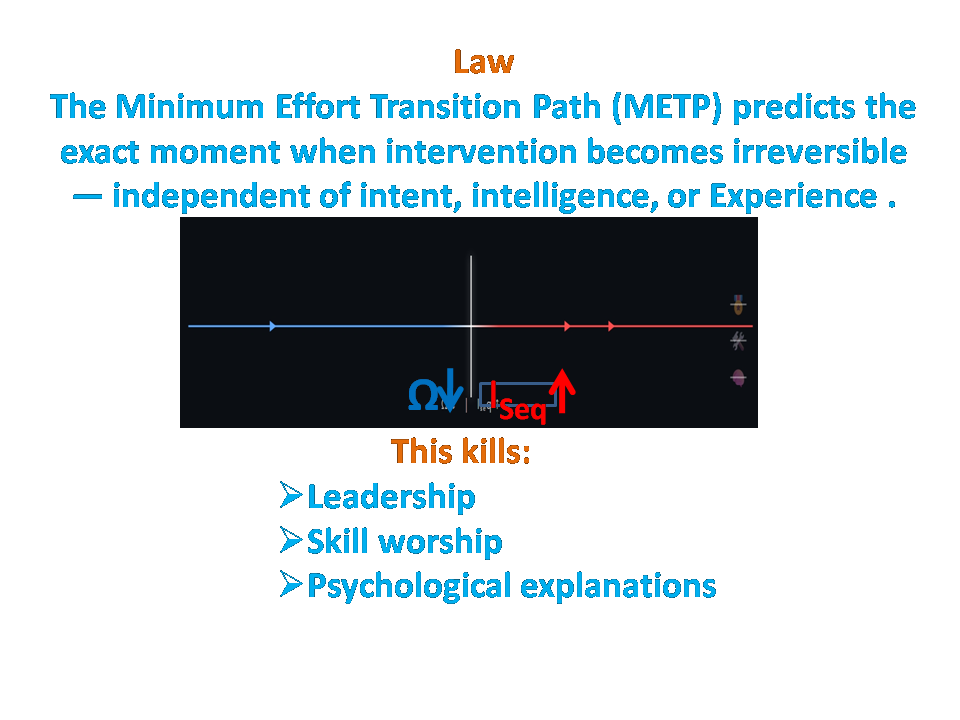
Universal Coherence Laws:
Predicting System Collapse Before It Happens
What We Do
Our services are customized to each client / organization .
CIAS Scale
The CIAS SCALE is our proprietary diagnostic and planning tool. It systematically identifies the configurational impact of essential drivers of performance, translating complex causal maps into immediate, executive-level action.
Click Here for a CEO’s Personality Fitness To Role Sample Report.
Because if you’re tired of boring, “everyone’s average” reports and want to see what actually happens when genius meets chaos… this is it.
Stress Response De-Configuring
Traditional Stress management methods impose relaxation. We De-Configure the Judgement – Response Structure at the Point of Threat Formation.
When the stress configuration fails to stabilize, stress does not consolidate – even under pressure.
This preserves Perspective-Taking and Decision Effectiveness without compromising authenticity.
Re-configure Revenue Risks & Paths
Your data might indicate the 28 % revenue loss, because your data only logs the outcome, ignoring the Configurational Impact of the Decision Mechanism that caused it. Our delivers the specific protocol to stop it. We focus exclusively on that high-value segment, requiring zero disruption to your core technology. The Configurational Impact Analysis will prove, within the first week, the way your current protocol to be fine-tuned, allowing you to verify a measurable revenue lift on your dashboard before the quarter closes.
Need A Look At Example Formulae?

View Our Protocols
You can have a view of our protocols on Protocols.io. Our journal papers available on Researchgate, Academia and Google Scholar.
Testimonials
Christine Walters
Why It Works?
Organizations do not succeed or fail because of isolated decisions, individual leaders, or short-term market movements.
They succeed or fail because of the underlying configuration of their systems — the deep structure that determines behavior, information flow, innovation potential, and strategic trajectory.
Most companies attempt to influence outcomes directly.
We take a different approach:
we map, model, and reconfigure the structural logic that produces those outcomes.
We don’t start with your story. We start with your system.
Executives already have stories; what they lack is a mechanism that reliably converts complexity into advantage. That’s the gap this protocol closes.
1. We map your organisation’s real behaviour — not the version that appears in decks.
The protocol parses how decisions actually propagate: incentives, bottlenecks, hidden attractors, and the “shadow circuitry” behind outcomes.
2. We isolate the governing dynamics you keep feeling but can’t quite name.
Every organisation has 3–5 forces that run the show. We surface them, quantify them, and show how they amplify or neutralise each other.
3. We model the configuration that would generate outsized performance with the least organisational strain.
Not an ideal state. Not a vision statement. A mathematically stable configuration you can actually run.
4. We prescribe the smallest set of interventions that create the largest systemic shift.
No 200-page transformation plan. No armies of consultants.
Just the 8–12 pressure points that unlock nonlinear change.
5. We give you the dashboard that predicts disruptions before they occur.
Because the real value isn’t improvement—it’s anticipation.
Notes
“We don’t start with your story” → Subtle jab at overused founder narratives.
“Not the version that appears in decks” → Executive sarcasm.
“Forces that run the show” → Signals realism and depth.
“No armies of consultants.” → Premium, confident, anti-consulting vibe—which CEOs secretly love.
“Nonlinear change” → Signals intellectual seriousness.
“Anticipation, not improvement” → MGI-level conceptual framing.